Thinking about building in DeForest instead of buying a resale home? You are not alone. In a market where inventory can feel tight and timelines matter, choosing between new construction and an existing home comes down to more than just age. If you are weighing cost, neighborhood feel, maintenance, and move-in timing, this guide will help you compare the tradeoffs clearly. Let’s dive in.
Why new construction stands out in DeForest
DeForest continues to be an active market for new housing, even with mortgage rates staying above 6% through 2024. The Village reported 77 new single-family permits, 52 two-family permits, and 315 multifamily permits in 2024. That tells you new construction is still a meaningful part of the local housing picture.
At the same time, lot supply is tighter than many buyers expect. As of January 1, 2025, only 25 improved vacant single-family lots were available in DeForest itself, compared with 143 across the larger DeForest-Windsor area. There are also 2,812 approved-but-unbuilt housing units in the region, with much of that future supply focused on multifamily and townhouse-style homes.
That matters because “new construction” in DeForest does not always mean a wide-open menu of detached homes on large lots. In many cases, it means buying into planned phases, builder-driven communities, or attached housing options. If you want a brand-new home, it helps to understand what is actually being built.
Price differences between new and existing homes
For many buyers, the first big question is price. In 2024, the median sale price for all single-family homes in the DeForest-Windsor area was $442,900. The median price for new single-family homes was $580,534, and when Diamond Village was excluded, the median new-build price rose to $629,561.
That gap shows why new construction often feels more expensive than nearby resale options. You are not just paying for a newer house. You may also be paying for the lot, builder premiums, design selections, and the cost of building in a limited-supply environment.
A builder’s base price can look competitive at first glance. But your final number may rise once you add lot premiums, site work, appliances, landscaping, or finish upgrades. That is why it is important to compare the full delivered cost of a new home against the actual purchase price of an existing one.
Neighborhood feel and lot setting
One of the biggest differences between new and existing homes in DeForest is the setting around the house. Village planning emphasizes connected neighborhoods, mixed-use areas, resident amenities, buffering, and access to transportation, parks, shopping, services, and jobs. Newer communities are often built with a more structured layout and a phased plan.
That can be appealing if you like newer infrastructure and a more coordinated neighborhood design. You may find sidewalks, trails, and a layout that reflects current planning priorities. DeForest’s location along I-39/90/94 and WI 19 also supports its appeal for buyers who want access to Madison and surrounding areas.
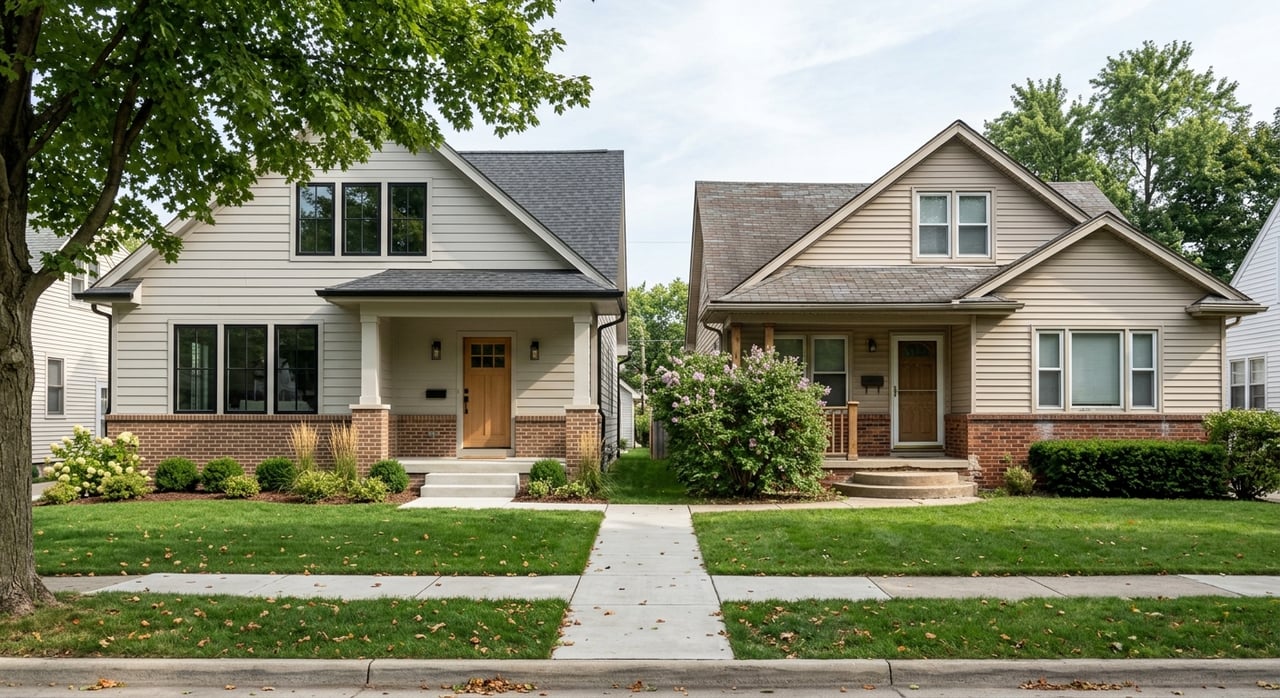
Existing homes often offer something different. You may get mature trees, established streets, finished landscaping, and a neighborhood that is already fully built out. If it matters to you to see the exact yard, nearby homes, and surrounding streets before you decide, resale homes can offer more certainty.
Floor plans and customization options
New construction gives you the appeal of a fresh start, but that does not always mean full customization. In DeForest, approved housing types include single-family lots, duplexes, townhomes or condominiums, and multifamily units in developments such as Homestead Addition, Pleasant Hill Estates, Riverstone Townhomes, and the amended Conservancy Place plan. The options can be broad in type, but many choices are still shaped by builder plans and community requirements.
For buyers, that means you may be able to choose a floor plan, exterior style, and interior finishes, but within a defined system. You are often selecting from pre-set packages rather than designing every detail from scratch. That structure can make decisions easier, but it can also limit flexibility.
Existing homes flip that tradeoff. You get what is already there, but what you see is what you get. If you value a unique layout, a finished basement, or a yard that is already established, a resale property may check those boxes better than a newly built home.
Energy efficiency and maintenance costs
A major reason buyers consider new construction is lower maintenance and potentially better efficiency. New homes must meet current building energy code, but that does not automatically mean they are premium-efficient. If a home is ENERGY STAR certified, it exceeds code by at least 10% and is independently verified for insulation, windows, air sealing, and HVAC performance.
ENERGY STAR says certified homes are about 20% more efficient on average and can deliver at least 10% savings on annual utility bills. The Department of Energy also notes that adding insulation during construction is generally more cost-effective than retrofitting it later. In simple terms, building efficiency in from the start can be easier and less disruptive.
Existing homes can still become more efficient, but you need to budget for those improvements yourself. EPA estimates that air sealing and insulation in a typical existing U.S. home can save about 15% on heating and cooling costs and about 11% on total energy costs. That means an older home may still work well for your budget, but you should plan for upgrades over time.
Timelines are often very different
If you need to move quickly, this may be the deciding factor. A resale home usually follows a more familiar closing path, and you can often move from accepted offer to closing on a shorter timeline. You can also inspect the home in its finished condition before making your final decision.
New construction is more structured and often slower. DeForest requires building permits for new residential construction, asks applicants to allow 10 business days for permit approval, and has development application windows of 30 to 60 days depending on the type of application. The Village also notes that some major projects may take a few years to complete.
That does not mean new construction is a bad option. It simply means the timeline may be less predictable than buying an existing home. If your move is tied to a job change, school calendar, or sale contingency, timing deserves careful attention.
How negotiation works in each scenario
Many buyers assume new homes leave little room for negotiation. In reality, the negotiation style is just different. Builders often prefer to protect the base price and offer value through upgraded flooring, appliances, or closing-cost assistance instead.
Builders may also ask for an upfront deposit and may present financing through an associated lender. You still have the right to shop around rather than use the builder’s preferred lender. If the home is not yet built, it is also smart to ask whether financing will involve a construction loan or a construction-to-permanent loan, and whether that means one closing or two.
With an existing home, your leverage often comes through the offer terms. Financing contingencies and inspection contingencies can help protect you if the loan does not come together or the home has serious issues. That makes resale transactions feel more flexible for buyers who want room to negotiate based on condition and seller concessions.
Budget for more than the sticker price
One of the most important comparisons is total cost, not just purchase price. In DeForest, new residential construction may include village charges such as building permit, impact, park, stormwater, and water or sewer hookup fees. In a modeled 45-lot single-family subdivision, the Village reported average fees of $6,741 per new home, though final fees vary case by case.
There can also be other costs buyers overlook. Construction guidance highlights items such as grading, seed or sod, decks, porches, landscaping, kitchen appliances, utility access fees, permits, inspection and recording fees, and possible construction-loan interest or points. DeForest utilities may also include ongoing water, sewer, stormwater, and watershed-related charges, including a watershed charge on new-built homes and businesses.
A good way to compare homes is to break the budget into four parts:
- Base house price
- Lot premium and site work
- Design-center upgrades and appliances
- Recurring monthly utility and carrying costs
That simple framework can help you see why a new-build quote may start lower than expected, then rise as the real-world numbers come into focus.
When an existing home may fit better
Existing homes can be the better option when you want a faster move, a visible finished setting, and more traditional offer negotiation. You can usually evaluate the lot, street, landscaping, and surrounding homes before committing. That can bring peace of mind if neighborhood feel is a major priority for you.
Resale homes may also work well if you are comfortable taking on maintenance and future updates. After closing, homeowners are responsible for repairs and upkeep, so it helps to have a realistic budget. In return, you may get a lower upfront price and a home in a more established part of DeForest.
This is especially relevant in a market where much of the future supply is still tied to planned phases and attached housing. If you want immediacy and certainty, an existing home may line up better with your goals.
Questions to ask before choosing new construction
If you are leaning toward a new build in DeForest, ask detailed questions early. Clear answers can help you compare one builder, one community, or one lot against another.
Here are a few of the most useful questions:
- What is included in the base price, and what counts as an upgrade?
- What is the estimated completion date, and what happens if it changes?
- What warranties come with the home?
- Can you still hire a third-party inspector?
- What are the builder deposit refund conditions?
- Do you have to use the preferred lender?
- Is the home built to code only, or does it have third-party efficiency certification?
- Does the neighborhood require HOA approval for exterior changes?
Those questions can save you money, reduce surprises, and make it easier to compare a new home against an existing one.
The bottom line for DeForest buyers
In DeForest, new construction tends to reward buyers who value newer systems, a more current layout, and the chance to personalize finishes enough to accept a slower and sometimes more expensive process. Existing homes tend to reward buyers who value a quicker move, a fully visible setting, and more familiar negotiation tools.
There is no one-size-fits-all answer. The right choice depends on your timeline, budget, tolerance for uncertainty, and what matters most in your day-to-day living experience. If you want help comparing actual options in DeForest, Tony Hedberg can help you evaluate both new construction and resale opportunities with a clear, local perspective.
FAQs
How much more does new construction cost in DeForest?
- In 2024, the median sale price for all single-family homes in DeForest-Windsor was $442,900, while the median for new single-family homes was $580,534. Excluding Diamond Village, the median new-build price was $629,561.
Are there many new construction lots available in DeForest?
- Supply is more limited than many buyers expect. As of January 1, 2025, DeForest had 25 improved vacant single-family lots available, while the larger DeForest-Windsor area had 143.
Is new construction in DeForest mostly single-family homes?
- No. Recent approvals include single-family homes, duplexes, townhomes or condominiums, and multifamily units, so new construction in DeForest includes several housing types.
Are new homes in DeForest more energy efficient than existing homes?
- They may be, but it depends on the build standard. All new homes meet current code, while ENERGY STAR certified homes exceed code by at least 10% and average about 20% more efficiency, according to ENERGY STAR.
Can you negotiate on a new construction home in DeForest?
- Yes, but the structure is often different from a resale purchase. Builders may be more likely to offer upgrades or closing-cost help than reduce the base price.
When is an existing home a better choice in DeForest?
- An existing home may be a better fit if you want a faster move, prefer to see the finished lot and surroundings before buying, or want to negotiate through inspection findings and contingencies.