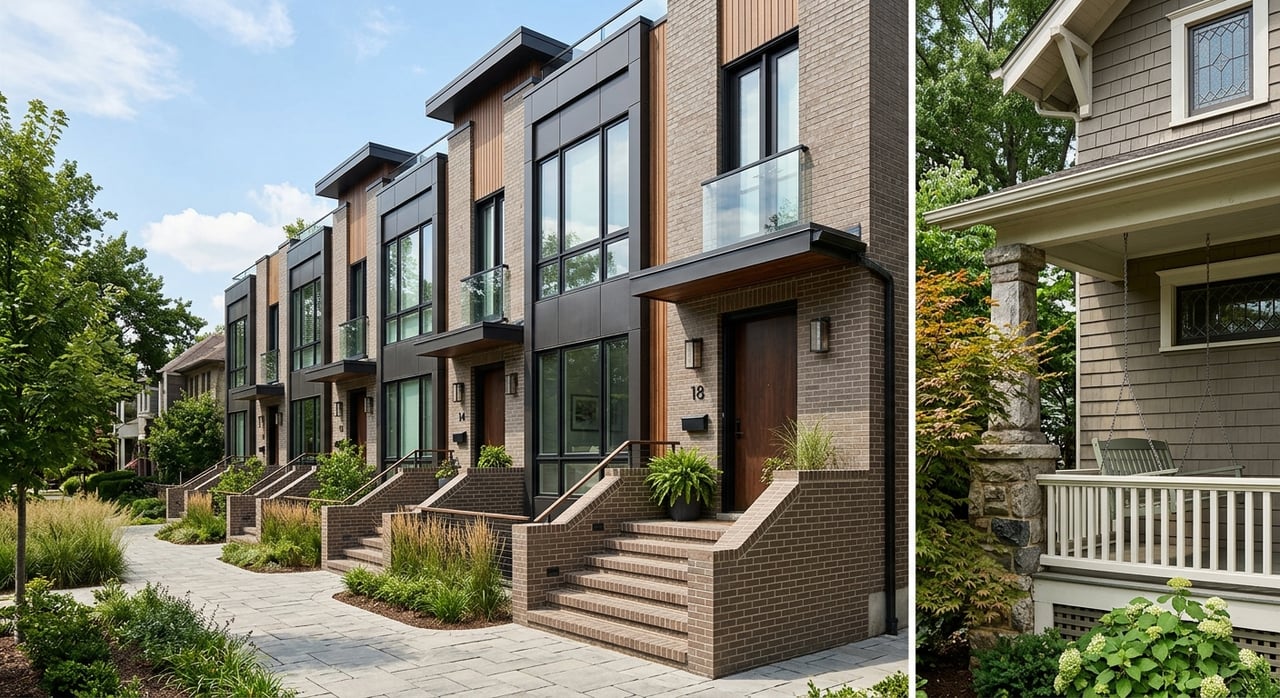
Wondering whether a condo or a single-family home makes more sense in Madison? You are not alone. Many buyers here are weighing convenience, location, parking, maintenance, and long-term flexibility all at once. If you are trying to decide which path fits your lifestyle and budget, this guide will help you compare the tradeoffs and narrow in on the right move. Let’s dive in.
Compare the core ownership differences
The biggest difference starts with what you own and what you are responsible for. With a condo, you typically own your individual unit and share an interest in common areas, while the association generally owns the building and common property in Wisconsin. That setup can reduce your day-to-day exterior maintenance, but it also means you need to understand association rules, budgets, fees, and insurance responsibilities.
According to Wisconsin condo insurance guidance, condo owners often use an HO-6 policy for unit-specific coverage, and loss-assessment coverage can matter if the association charges owners after a common-property loss. In simple terms, a condo can offer convenience, but you will want to review the association documents just as carefully as the home itself.
A single-family home usually works the other way around. You have more direct control over the house and lot, but you also take on more responsibility for repairs, upkeep, and utilities. The Consumer Financial Protection Bureau homeownership resources specifically remind buyers to budget for maintenance, repairs, and utilities as part of the true cost of ownership.
Know what costs look like in Madison
In Madison, the monthly payment is only part of the story. Condo fees can materially change your total housing cost, especially in more central locations. That is why it is important to compare the full monthly cost, not just the mortgage.
The City of Madison 2025 Housing Snapshot gives useful examples. One west-side condo example included a $350 monthly condo fee, while one downtown example estimated condo fee plus normal maintenance at $800 per month. These are examples rather than marketwide averages, but they show why condo fees deserve close attention.
Single-family homes often have fewer mandatory shared fees, but that does not always make them cheaper month to month. Instead, costs may show up in a different form, like lawn care, snow removal, roof repairs, siding work, or higher utility bills. If you prefer predictability, a condo may feel simpler. If you prefer control over where your money goes, a single-family home may be more appealing.
See where each home type tends to cluster
Madison’s housing pattern offers an important clue for your search. Recent housing production has been heavily shaped by infill and redevelopment, especially in central areas. That means buyers looking at condos often find more options downtown, on the Isthmus, and in other redevelopment-focused locations.
The 2025 Housing Snapshot says 45% of homes completed over the past decade were in the Transit-Oriented Development overlay, including Downtown, and another 10% were in infill areas. It also notes that 17% of all new homes built were Downtown, while most new one-unit homes were built on the edges of the city.
For buyers leaning toward a detached home, that same report points to areas with large numbers of one-unit structures, including Blackhawk/Greystone, Grandview Commons, Northport-Sherman Village, West High–Hoyt Park, and Whitetail Ridge. These are examples of where a more traditional single-family search may align with the housing stock.
Match your lifestyle to the location
For many buyers, the real question is not just condo versus single-family. It is also central access versus space. In Madison, that tradeoff can shape your daily routine more than you might expect.
If you want to be closer to downtown destinations, trails, campus-adjacent areas, or a less car-dependent routine, a condo may fit more naturally. Metro Transit serves residential neighborhoods, the Isthmus, schools and universities, parks, shopping, and entertainment venues, and Madison’s bike-boulevard network connects neighborhoods, schools, parks, and major bike routes. That makes central living especially attractive if you expect to walk, bike, or use transit regularly.
A condo-oriented setting can also mean a different relationship to outdoor space. The city’s Triangle redevelopment project is one example of a more pedestrian-focused urban environment with underground parking, added bike and pedestrian connections, shared outdoor areas, and direct access to Brittingham Park. For some buyers, that kind of location is worth trading private yard space for convenience and access.
If you want more private outdoor space, room for storage, or a quieter home setup, a single-family property may be the better fit. You may also have more flexibility for things like a garage, driveway, hobby space, or future home changes.
Think through parking and transportation
Parking is one of the clearest day-to-day differences between many condo and single-family experiences in Madison. In central condo-heavy areas, parking may be limited, assigned, shared, rented separately, or tied to city permit rules. That can be perfectly manageable, but it should be part of your decision.
The City of Madison says a residential parking permit allows parking beyond posted time limits but does not guarantee a space, and some permit areas are oversold. The city also notes that downtown metered parking is $2.00 per hour. If a condo does not include dedicated parking, you may need to plan for a garage space, permit, or another paid arrangement.
Single-family homes often make this simpler. A driveway, garage, or easier street parking can reduce friction if you drive daily, have multiple vehicles, or want more storage.
Consider green space and outdoor living
Madison offers strong park access no matter which home type you choose. The City of Madison Parks and Sustainability information says the city manages more than 270 parks totaling over 5,600 acres, and more than 95% of residents live within a 10-minute walk of a park.
That matters because outdoor living looks different depending on the property type. Condo owners may rely more on nearby parks, lakefront paths, courtyards, and shared outdoor areas. Single-family owners may enjoy those same public spaces while also having private yard space at home.
Neither option is automatically better. It comes down to whether you want public green access close by, private outdoor space of your own, or a mix of both.
Look at long-term flexibility
Your first few years in a home matter, but so does what the property can support over time. If your priority is low exterior maintenance and a lock-and-leave lifestyle, a condo may check the right boxes. Just remember that convenience often comes with association governance, recurring fees, and the possibility of special assessments.
If your priority is control and future options, a single-family home may offer more room to adapt. In Madison, that flexibility is increasingly shaped by city policy. The 2024 Housing Affordability Report says accessory dwelling units are now permitted in all residential zoning districts, and the city’s 2025 housing-forward proposals expanded two-unit housing options on lots that currently allow single-family homes.
That does not mean every detached lot will support every future use. But it does mean buyers should think beyond today’s floor plan and ask what a property may allow down the road.
A simple way to choose
If you are still torn, start with your daily habits rather than the building type itself. A condo may be the better fit if you value central access, shared upkeep, and a simpler exterior maintenance routine. A single-family home may make more sense if you want more privacy, storage, yard space, and control over the property.
A good decision usually comes from balancing three things:
- Monthly cost, including fees, maintenance, and parking
- Lifestyle fit, including commute, transportation, and outdoor preferences
- Future flexibility, including space needs and possible long-term uses
In Madison, the right answer is often less about which home type is better and more about which one supports the way you want to live.
If you want help comparing neighborhoods, weighing condo fees against ownership costs, or finding the right fit in Madison and Dane County, Tony Hedberg can help you make a confident, data-driven decision.
FAQs
What is the main difference between owning a condo and a single-family home in Madison?
- A condo usually means you own your unit and share common areas through an association, while a single-family home gives you direct control over the house and lot along with full responsibility for maintenance and repairs.
Are condo fees in Madison high enough to change what you can afford?
- They can be, because City of Madison examples showed monthly condo-related costs ranging from $350 in one west-side example to about $800 in one downtown example, so you should compare total monthly ownership costs, not just the mortgage.
Where are condos most common in Madison?
- Condos and similar higher-density housing options tend to be more common in Downtown, the Isthmus, and other infill or redevelopment areas, based on the city’s recent housing production patterns.
Where are single-family homes more common in Madison?
- The city reports that most new one-unit homes are on the edges of Madison, and it identifies areas such as Blackhawk/Greystone, Grandview Commons, Northport-Sherman Village, West High–Hoyt Park, and Whitetail Ridge as examples with many one-unit structures.
Is parking harder with condos in central Madison?
- It often can be, because residential permits do not guarantee a space and some permit areas are oversold, so buyers should confirm whether a condo includes dedicated parking or budget for another parking solution.
Can a single-family home in Madison offer more future flexibility?
- It may, because Madison now permits accessory dwelling units in all residential zoning districts and has expanded some two-unit housing options on lots that currently allow single-family homes, subject to applicable rules and property-specific limits.