Short answer: It mostly comes down to your mortgage rate. Paying extra on your loan gives you a sure "return" equal to that rate, with no risk. Investing can earn more over time, but it can also lose money, so the lower your rate, the harder it is for paying early to win.
Here is how that works, in plain terms.
Paying extra is a guaranteed return
Every extra dollar you put toward your loan balance is a dollar you no longer pay interest on. So the "return" on paying early is simply your mortgage rate.
On a 3% loan, each extra $100 you pay saves about $3 a year in interest.
On a 7.28% loan, each extra $100 saves about $7.28 a year.
That 7.28% is not random. It was the average 30-year fixed rate on November 19, 2026, according to Freddie Mac. A year earlier, the average was 6.26%.
Here is a simple example. Say you have a $400,000, 30-year loan and you add $200 a month to your payment. These are round numbers to show the idea, not a loan quote.
At 7.28%: you would pay the loan off almost 6 years early and save about $135,000 in interest.
At 3%: you would pay it off almost 5 years early and save about $36,500 in interest.
Same extra $200. Very different payoff. The higher the rate, the more paying early is worth.
Most owners have a low rate
Here is the twist. Most people with a mortgage today did not borrow at today's rates. As of mid-2026, about 2 in 3 U.S. mortgages had a rate under 5%, based on the FHFA National Mortgage Database.
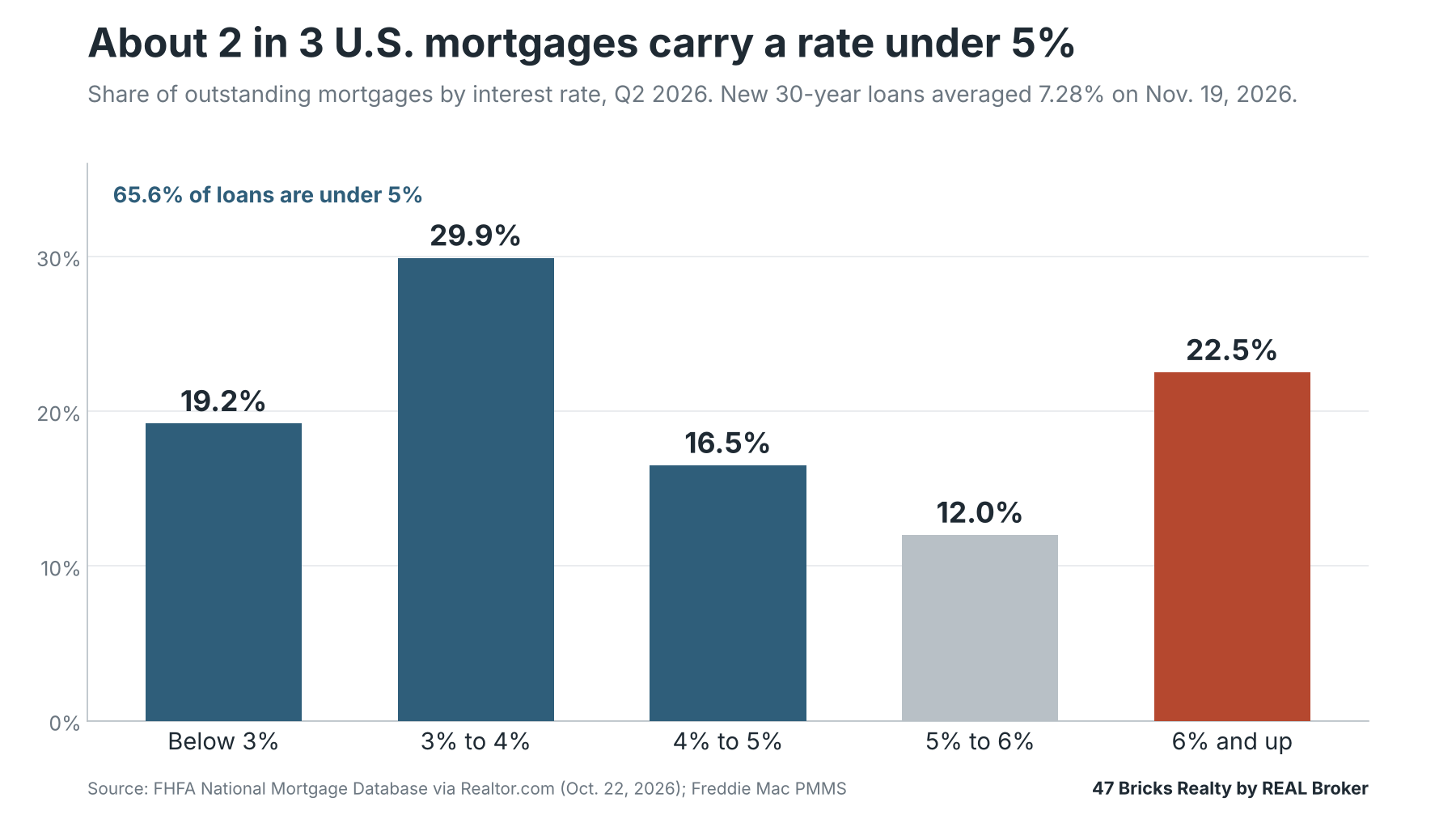
19.2% of mortgages were below 3%.
29.9% were between 3% and 4%.
22.5% were at 6% or higher.
If you are in that first group, paying extra "earns" you less than 3%. That is a low bar. On November 19, 2026, the 10-year Treasury yield was about 5.05%, according to Dow Jones market data. In other words, a government bond was paying more than many people's mortgage rates.
Investing can earn more, but it is not guaranteed
This is the other side of the choice. The stock market has had great years and painful ones. Here are a few years of S&P 500 returns, with dividends, from NYU professor Aswath Damodaran's data:
2008: down 36.55%
2022: down 18.04%
2025: up 17.78%
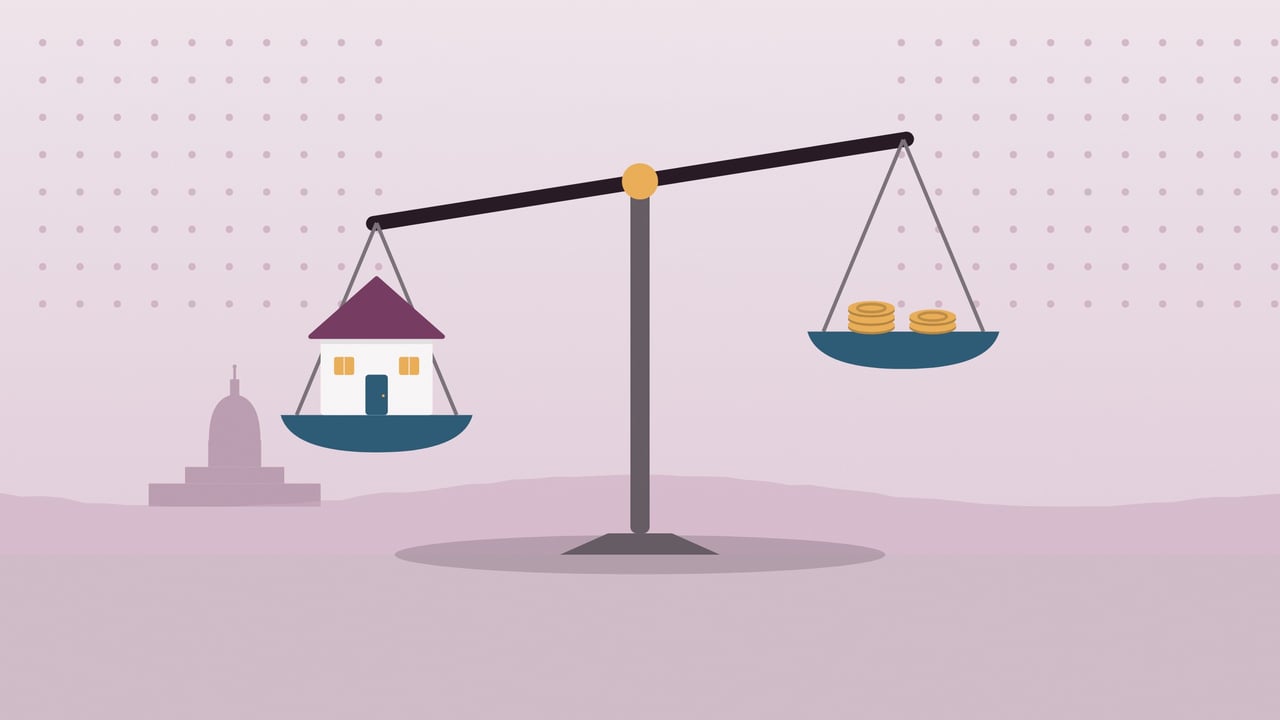
Economists call this the trade-off between risk and return. A paid-down mortgage gives you a small, sure gain. Stocks give you the chance of a bigger gain, along with the chance of a loss, sometimes a big one, in any single year.
Time matters here. Money you may need in a year or two is a poor fit for stocks. Money you can leave alone for many years has more time to ride out bad stretches.
The parts people forget
A fair comparison counts more than just the interest rate.
Home equity is hard to reach. Money you put into your home is locked up. To get it back, you usually have to sell or take out a new loan. Money in savings or an investment account is easier to reach in an emergency.
Taxes and insurance stay. Paying off your loan ends the mortgage payment, not the bill. In the City of Madison, the average home was assessed at $481,300 in the city's latest tax calculation. Property taxes and insurance on a home like that keep coming every year.
Few people get a tax break for mortgage interest. For 2026, the IRS standard deduction is $32,200 for married couples filing jointly and $16,100 for single filers. Many homeowners take that instead of itemizing, so their mortgage interest saves them nothing on taxes. Ask a tax pro about your own case.
Order matters. Paying extra on a mortgage usually makes the most sense after you have an emergency fund and have paid off higher-rate debt, like credit cards.
Why some people pay it off anyway
Not every choice is about squeezing out the most money. Some homeowners want to own their home free and clear, especially as they near retirement. A home with no mortgage means lower monthly bills and less stress if income drops. Nationally, 39.4% of homeowners had no mortgage in 2020 to 2024, according to the U.S. Census Bureau.
That peace of mind has real value. It just may not show up on a spreadsheet.
What would have to happen for each choice to win
I don't predict markets or rates. But here is how each choice comes out ahead.
Paying early tends to win if:
Your mortgage rate is high, like many loans made in the last few years.
Investments earn less than your mortgage rate over the years you hold them.
You are close to retirement and want lower bills.
Investing tends to win if:
Your mortgage rate is low, like a 3% loan.
Your investments earn more than that rate over a long stretch.
You leave the money invested through the bad years.
What this means for you
If your rate is under 4%: Paying extra is safe, but it is a low return. Many owners in this spot keep the low-rate loan and build savings instead.
If your rate is 6% or higher: Paying extra is a strong, sure return. Even small extra payments add up.
If you're in the middle: A mix can work. Some extra toward the loan, some toward savings, with an emergency fund first.
If you're thinking about moving: Your rate and your equity both shape your next step. Look at both before you decide.
Have a question about your own situation? Call or text me at 608.213.3654.
Sources
Freddie Mac, Primary Mortgage Market Survey (30-year fixed rate, November 19, 2026)
Realtor.com, Mortgage Rate Lock-In Still Dominates (October 22, 2026; FHFA National Mortgage Database, Q2 2026)
Dow Jones via Morningstar, 10-Year Treasury Yield Falls to 5.051% (November 19, 2026)
Aswath Damodaran, NYU Stern, Historical Returns on Stocks, Bonds and Bills (updated January 2026)
Internal Revenue Service, IRS releases tax inflation adjustments for tax year 2026, including amendments from the One, Big, Beautiful Bill
City of Madison, District 10 blog, Let's Talk Budget: 2026 Property Taxes (December 13, 2025)
U.S. Census Bureau, Nearly 40% of U.S. Homeowners Did Not Have a Mortgage in 2024 (January 29, 2026)